AI-Assisted Telehealth and Screening for Vision-, Hearing-, Oral, and Genetic Diseases
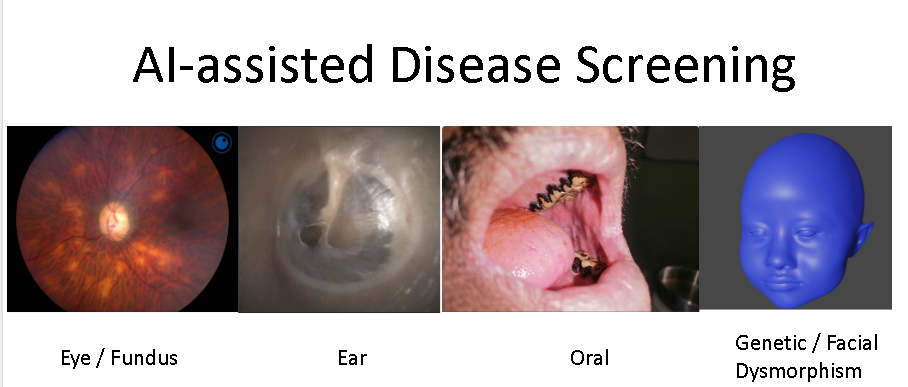
Primary healthcare centers in Nepal often rely on health assistants for initial screenings without specialist support, leading to delayed or missed diagnoses of preventable conditions like diabetic retinopathy, glaucoma, chronic otitis media, oral cancer, and genetic syndromes.
Our goal is to improve early detection and referral for commonly underdiagnosed conditions in primary care settings. We achieve this by developing AI-assisted screening technologies that digitize patient examinations, build large annotated datasets, and provide actionable guidance for health assistants on which patients require specialist care or further investigation.
The project has created one of Nepal’s largest annotated medical imaging datasets with over 38,000 ophthalmology images and 1,100+ ENT images, with initial oral and genetic screening images underway. Partner clinics have transitioned from paper-based to digital workflows, benefiting over 500 patients monthly. AI models have been trained on real-world portable devices, including fundus cameras, otoscopes, and smartphones, while capacity-building initiatives such as internships, workshops, and hackathons are creating a pipeline of healthcare workers and AI practitioners.