Estimating Pesticide Concentration with Smartphone
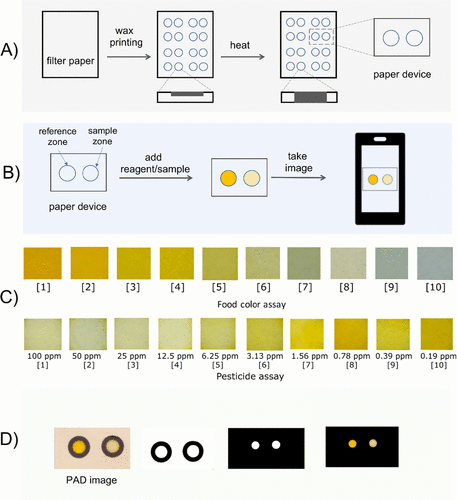
Paper-based analytical devices (PADs) offer low-cost and accessible methods for diagnostics and environmental monitoring but often lack sensitivity and selectivity compared to traditional spectrophotometer-based assays due to colorimetric detection limitations. While visual inspection provides qualitative results, quantitative analysis using image processing may not accurately capture subtle color variations, affecting PAD performance, especially for narrow wavelength signals.
Our goal is to improve PAD sensitivity and selectivity by developing computer vision algorithms that accurately extract analyte concentrations from smartphone images, providing a reliable, quantitative alternative to traditional colorimetric analysis.
The project developed a smartphone-based system using machine learning to analyze paper-based color tests for pesticide detection. By looking at both the sample and reference zones on the test strip, the system could adjust for differences in lighting, camera type, and user handling, making it more reliable in real-world conditions. Four different ML approaches were tested, and the best models were able to classify pesticide levels into three broad categories (high, medium, and low) with up to 91% accuracy. While predicting exact concentrations remains challenging, the results show strong potential for a low-cost, easy-to-use, and field-ready solution for environmental and food safety monitoring.