GI Tract Anomaly Detection from Endoscopy Images
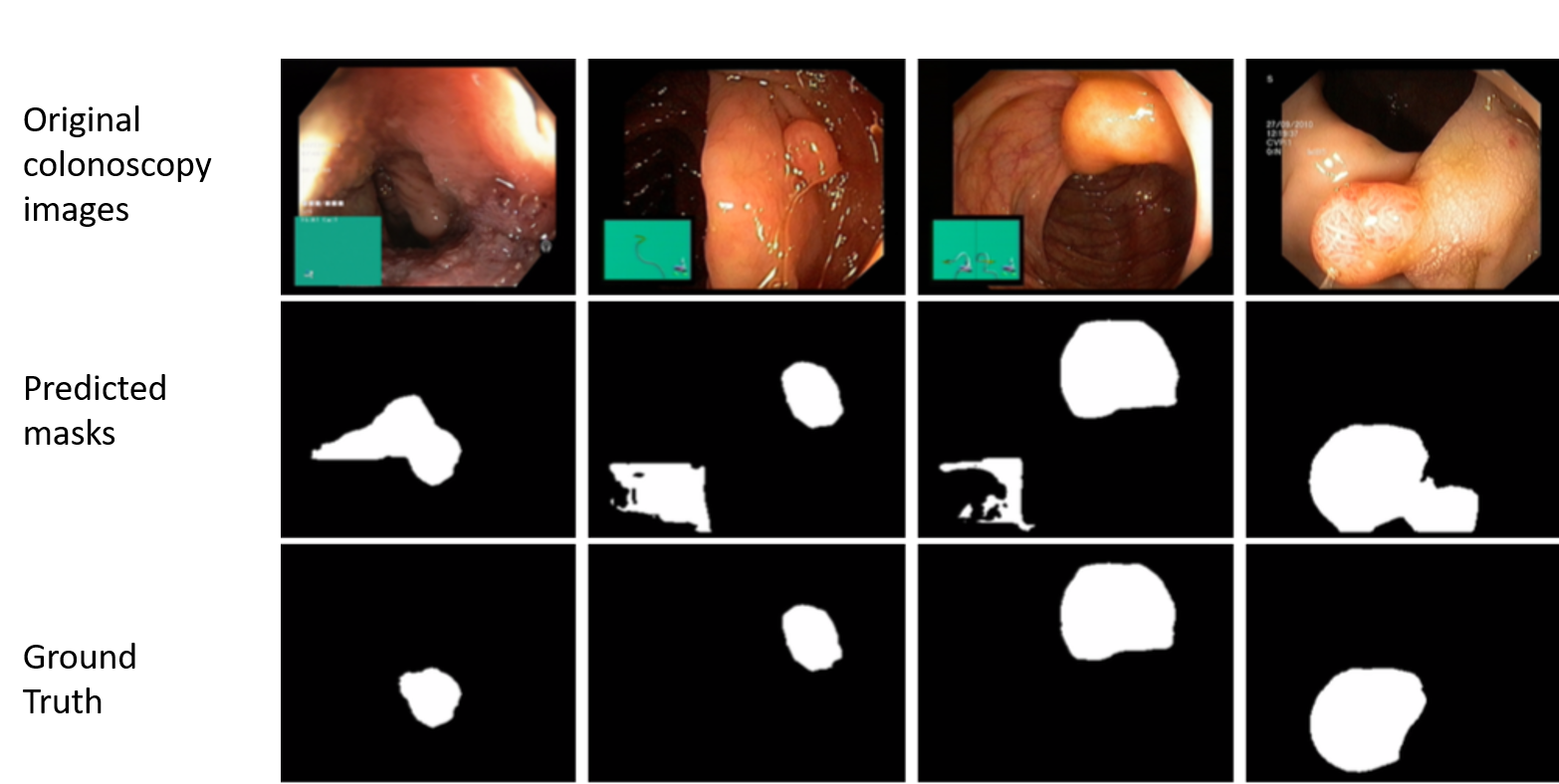
Detecting polyps in GI organs during endoscopic procedures is challenging due to variations in shape, size, intensity, and specular reflections. These challenges contribute to missed diagnoses and higher colorectal cancer (CRC) mortality rates. Accurate, efficient detection and segmentation tools are crucial to supporting endoscopists and improving patient outcomes.
Our goal is to develop advanced techniques for detecting, localizing, and segmenting anomalies across GI organs, creating novel deep learning architectures for polyp segmentation that surpass existing state-of-the-art methods and provide robust support for clinical endoscopy.
The project successfully developed and validated deep learning architectures for anomaly and polyp detection across multiple GI organs. Benchmark evaluations demonstrate improved accuracy over prior methods, offering endoscopists reliable automated analysis to support early colorectal cancer detection and improve clinical decision-making.