SNAYU
(Snāyu Radiogenomics Translational Research Lab (स्नायु))
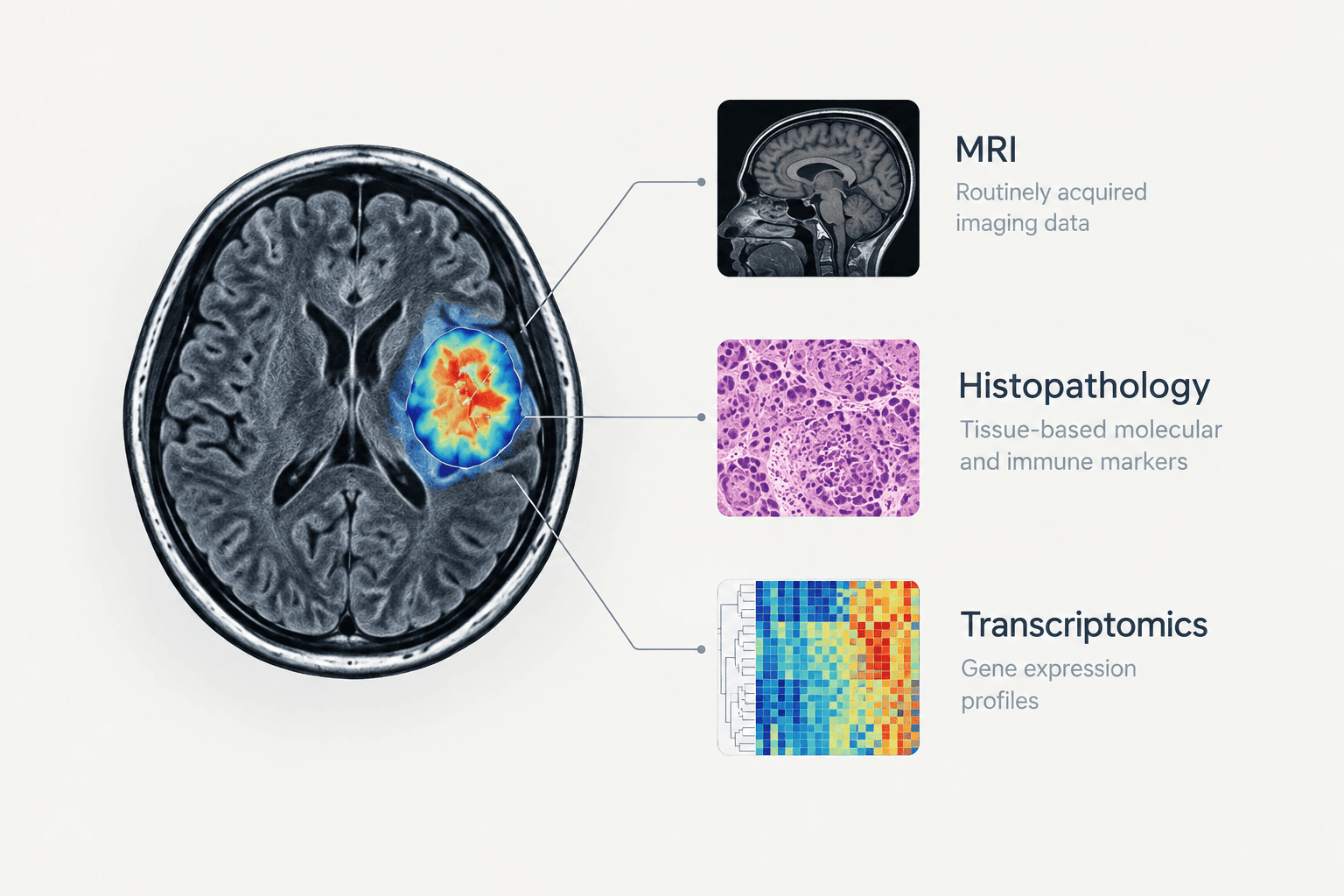
The Snayu Radiogenomics Translational Research Lab develops artificial intelligence that infers tumour biology from medical images. Molecular and immune characterisation of brain tumours now determines how patients are treated and what their prognosis is. That characterisation depends on tissue assays — sequencing, methylation profiling, immunohistochemistry — which are expensive, slow, and largely unavailable across South Asia.
The consequence is that patients in low-resource settings receive care guided by a coarser picture of their disease than the same patients would receive elsewhere. The lab treats this gap as a modelling problem. We build and validate models that recover molecular, immune and prognostic information from imaging that hospitals already acquire, integrate imaging with histopathology and transcriptomics where those are available, and quantify what a single tissue sample can and cannot represent about a heterogeneous tumour.
Equal weight goes to generalisation: models trained on North American and European cohorts have no established validity on South Asian patients, scanners or protocols, and establishing where they fail is part of the science rather than a caveat appended to it. The lab also trains clinicians and researchers in Nepal to do this work locally. The work begins at brain tumours and will expand to other cancers.
Department 1
division-1
Focus Areas
Imaging-Based Molecular Inference (Radiogenomics)Multimodal Medical AITumour Heterogeneity and Biopsy SamplingNeuro-oncology and Brain Tumour ModellingCross-Site Model Validation and Domain GeneralisationInterpretable and Uncertainty-Aware Clinical AIMedical AI TranslationClinical Decision SupportHistopathologyTranscriptomics Integration
Impact Areas
Brain Tumour Diagnosis and ClassificationPrecision OncologyCancer Prognosis and Survival PredictionClinical Decision Support in NeurosurgeryPre-operative Planning and Patient TriageCancer Diagnostics in Resource-Constrained SettingsMultimodal Cancer AssessmentMedical AI Dataset Development and ValidationCross-Site Clinical AI DeploymentEquitable Access to Cancer Diagnostics

