
In pictures
AI in the Box
AI-powered decision support for disaster preparedness in low-connectivity settings
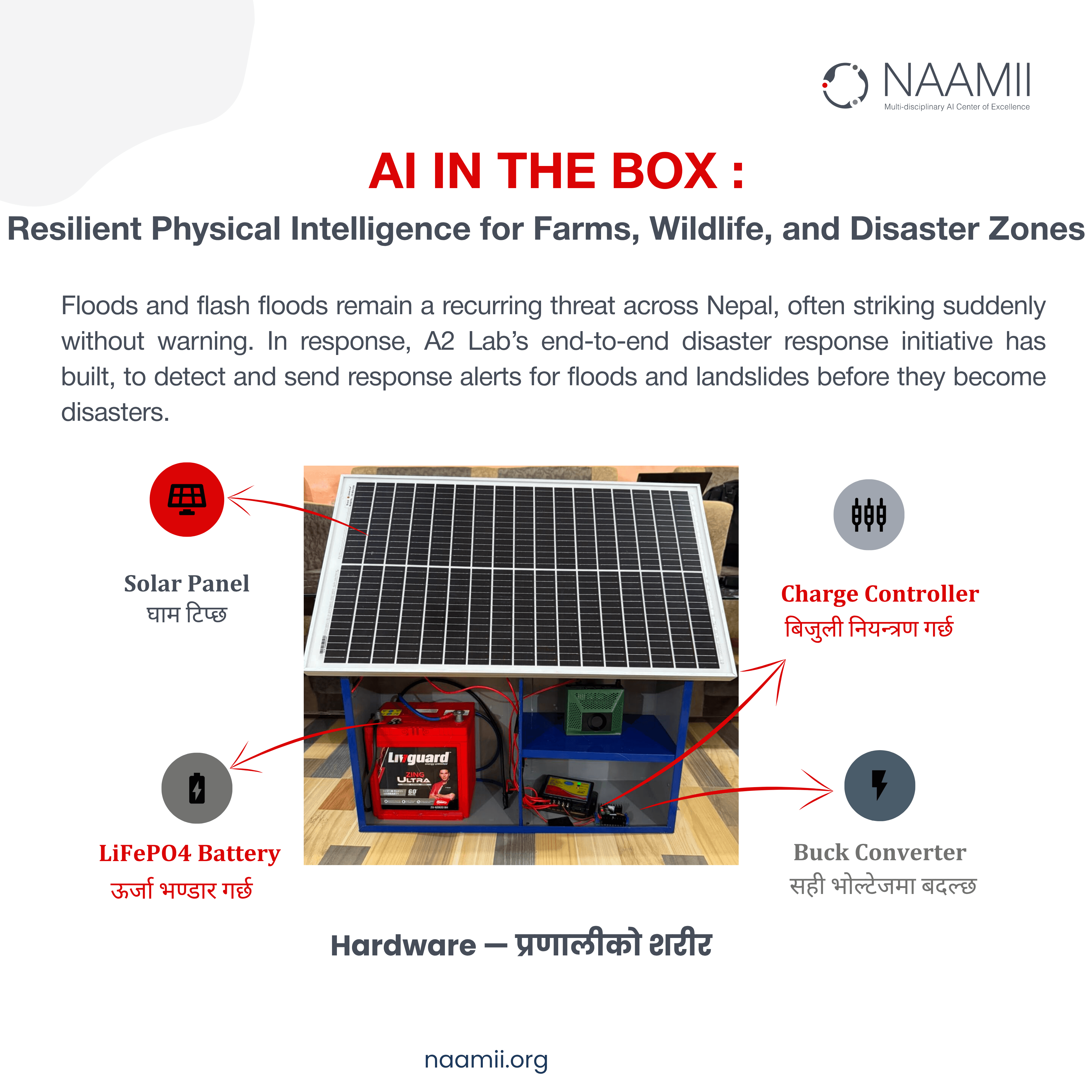
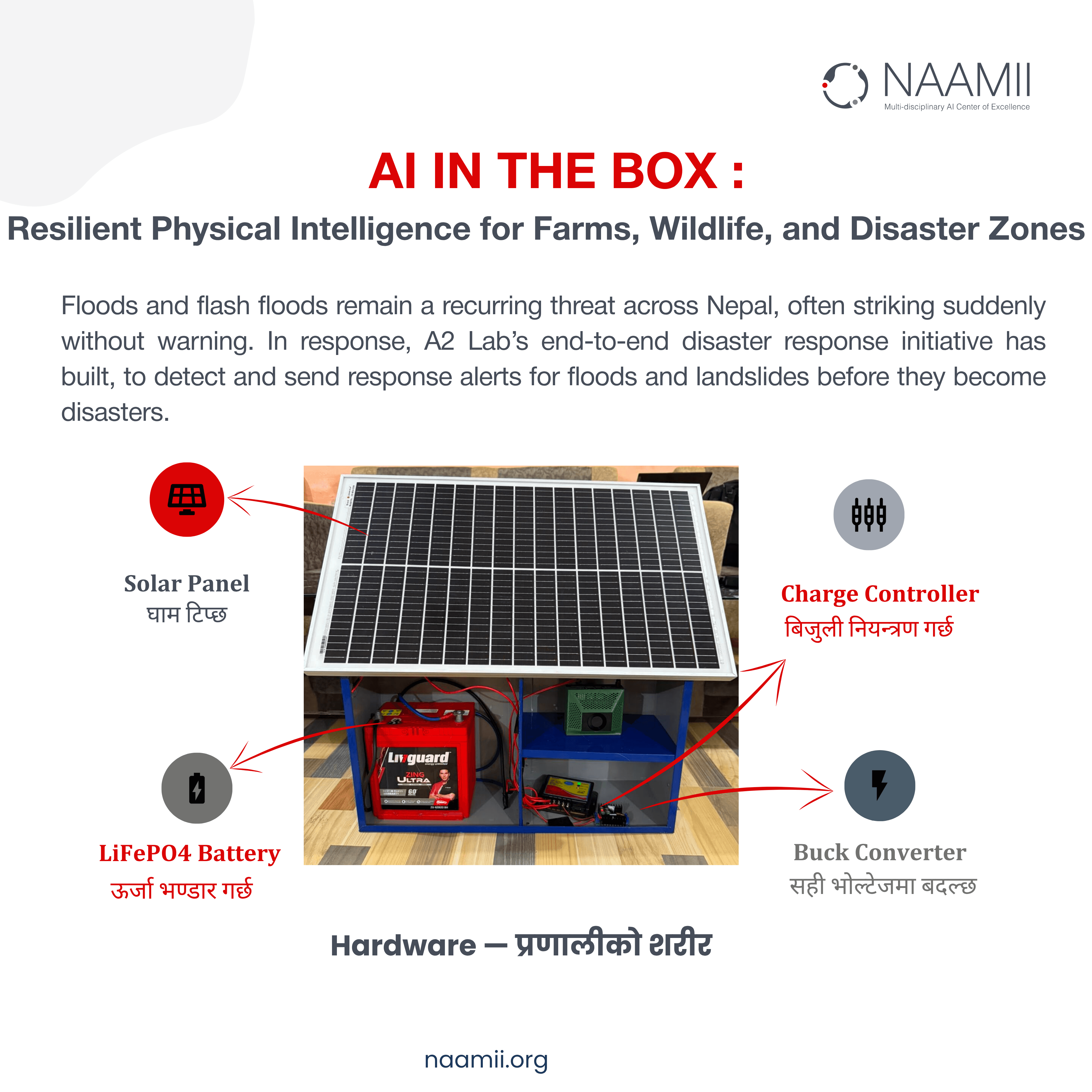
AI in the Box is an offline, solar-powered AI system designed to support local disaster preparedness and response in places where reliable electricity, internet connectivity, and access to digital infrastructure cannot be taken for granted.
Developed through the A² Innovation Lab at NAAMII in collaboration with Mercy Corps Nepal, and with support from the Global Resilience Partnership, the project brings together locally relevant disaster information, edge-based AI, and practical infrastructure to support Local Emergency Operation Centers (LEOCs).
The system is being introduced initially in Laljhadi and Punarbas municipalities in Kanchanpur, Sudurpashchim Province, with the aim of supporting local teams with timely information and decision support during disaster preparedness and response.
Why AI in the Box?
Many AI systems assume access to reliable electricity, high-speed internet, cloud infrastructure, and centralized data. These assumptions do not hold in many communities that face significant climate and disaster risks.
AI in the Box explores a different approach: bringing the computing, data, and AI capabilities closer to where they are needed.
The system is designed to continue operating in low-connectivity environments and to make locally relevant information available to the people responsible for disaster preparedness and response.
What is inside the Box?
AI in the Box combines:
- Edge-based AI: AI processing is performed locally rather than depending entirely on cloud services.
- Solar power: The system is designed to operate where reliable grid electricity may not be available.
- Local knowledge and data: Local laws, guidelines, disaster-response documents, and other relevant knowledge can be incorporated into the system.
- Flood and early-warning information: Flood bulletins and early-warning information can be brought together with other local data.
- Real-time information: Near-real-time data can support local decision-making.
- Multilingual assistance: The system provides interactive assistance suited to local users and contexts.
- Decision support: AI can help local emergency teams access relevant information and interpret it alongside locally approved guidelines and thresholds.
From data to local decision-making
AI in the Box is designed as a decision-support system, rather than as a replacement for local emergency-management teams.
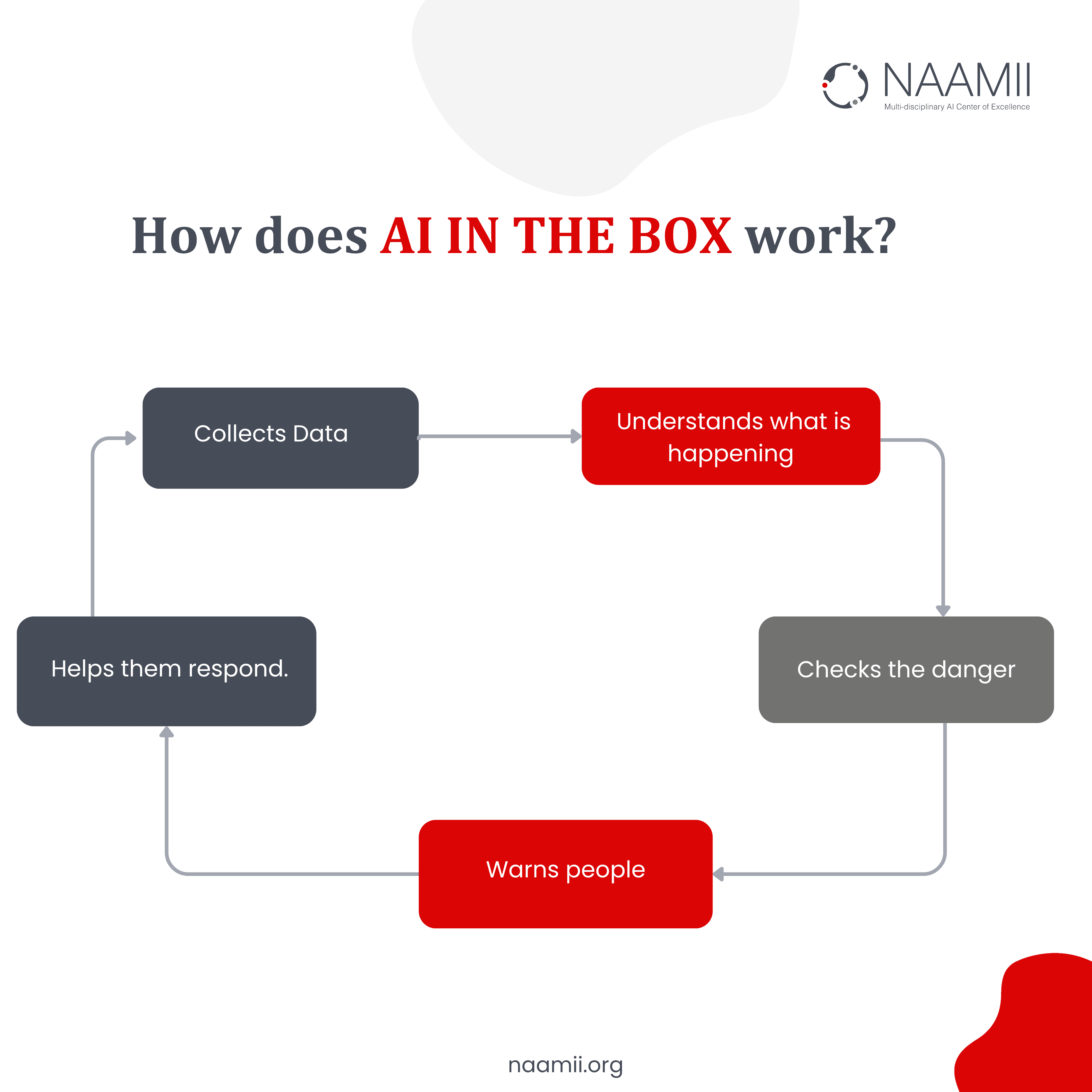
The system brings together different sources of information that may otherwise remain distributed across documents, bulletins, guidelines, and data systems. Local teams can interact with the system to access relevant information, receive alerts, and support decisions during preparedness and response.
An important part of the approach is that the system is built around local requirements and locally relevant information. This keeps the technology connected to the institutions and communities that use it.
Built for low-resource environments
AI in the Box is part of a broader effort to explore how AI can be deployed in environments where conventional digital infrastructure is limited.
The project focuses on three practical constraints:
Connectivity. The system is designed to function without continuous internet access.
Compute. Local edge infrastructure allows AI capabilities to operate closer to the point of use.
Skills and local capacity. The project brings technical development together with local disaster-response knowledge and practical deployment.
This approach allows AI to be considered as part of the infrastructure for resilience, rather than as a cloud service that is simply added on top of existing systems.
From the lab to the field
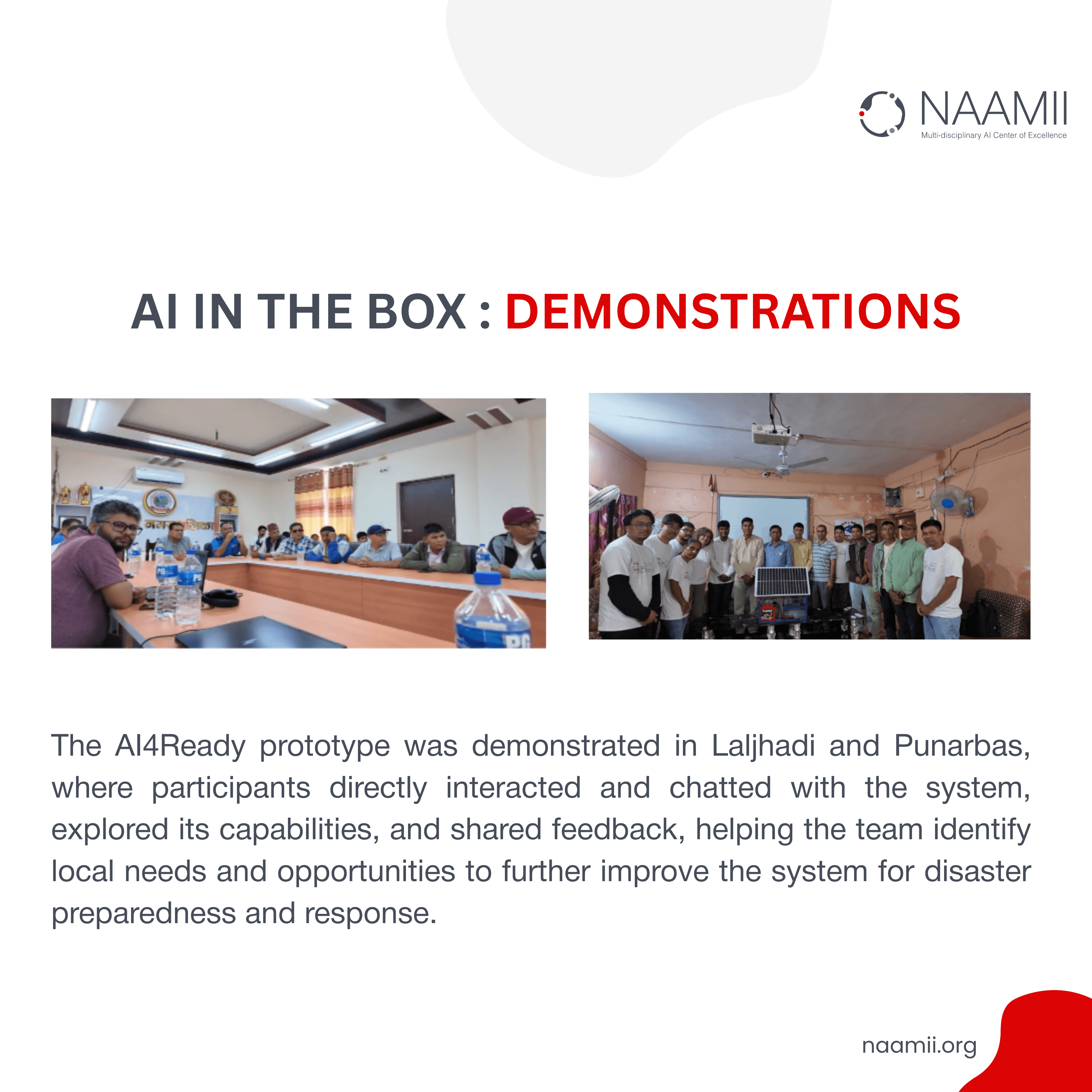
The project has moved from development and demonstration toward field deployment in Laljhadi and Punarbas, where AI in the Box is being demonstrated with municipal representatives and disaster-management teams.
The field deployment provides an opportunity to test how an offline, solar-powered AI system performs in a real local-government context and how it can support existing disaster preparedness and response processes.
A collaborative effort
AI in the Box brings together expertise in AI, local disaster risk management, infrastructure, and community resilience.
NAAMII — A² Innovation Lab
The project is led from NAAMII's A² Innovation Lab, with Dr. Bipendra Basnyat leading the initiative. The NAAMII team involved in the development and field work includes Dharmendra Singh Chaudhary, Samyam Sapkota, Shubham Thapa, and Subash Sigdel, among others.
Mercy Corps Nepal
Mercy Corps Nepal is the project partner, bringing expertise in disaster risk reduction, anticipatory action, local governance, and community resilience. The organisation's AI4Ready initiative frames AI in the Box as an AI-powered decision-support system for Local Emergency Operation Centers.
The Mercy Corps Nepal team publicly associated with the initiative includes Pratap Maharjan, Jagdish Dotel, Suraj Sigdel, Shambhavi Timilsina, Manish Dhungel, Saroj Thakur, Bandana Sharma, Sudip Sedhain, Sean Kenney, and Sumayyah Kadir.
Global Resilience Partnership
The project is supported by the Global Resilience Partnership, as part of the wider AI4Ready effort to explore practical applications of AI for disaster preparedness and resilience.
AI SENSE USA
The development of the broader AI in the Box platform also involves AI SENSE USA, with the work exploring end-to-end edge AI infrastructure, including hardware, software, and locally deployable AI models for low-resource environments.
Looking ahead
AI in the Box is an experiment in what locally deployed AI infrastructure can look like in places where conventional assumptions about connectivity and power do not hold.
By combining local data, edge computing, renewable power, and AI, the project explores a model in which communities and local institutions can retain greater control over the infrastructure and information they depend on.
The work in Kanchanpur provides a starting point for understanding how this approach can be adapted to other low-resource and disaster-prone settings in Nepal and beyond.
Project partners
NAAMII — A² Innovation Lab Mercy Corps Nepal Global Resilience Partnership AI SENSE USA
Initial field locations
Laljhadi Municipality, Kanchanpur, Sudurpashchim Province, Nepal Punarbas Municipality, Kanchanpur, Sudurpashchim Province, Nepal